






If you have already decided that high pressure casting machine technology is worth investigating, this guide is for you.
This is not a technical overview and not a market analysis report.
This is a purchasing document for sanitary ware manufacturers who are evaluating a high pressure casting machine investment.
In this guide, we will cover:
- What specifications you need to define before purchasing a high pressure casting machine
- How to read a machine specification sheet
- What your factory needs to prepare before installation
- Hidden costs that may not appear in supplier quotations
- How to evaluate whether a supplier can provide long-term support
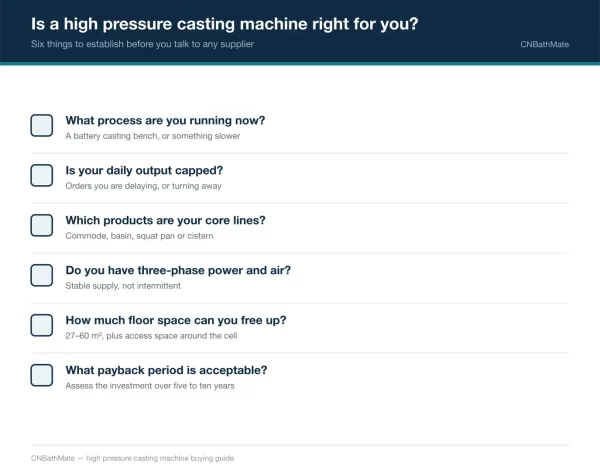
Figure 1 — Six things to settle before you talk to any supplier
Start With Production Requirements, Not The Machine
Before contacting any supplier, the first question should not be:
“How much does the machine cost?”
The first question should be:
“How many pieces do you need to produce per day, and what products are you producing?”
The capacity of a high pressure casting machine is usually measured by casting cycles per shift, but the number of pieces produced per cycle can vary significantly depending on the sanitary ware product.
For example:
| Product | Pieces Per Casting Cycle |
|---|---|
| Water closet (commode) | 4–6 pieces |
| Wash basin with pedestal | 24–30 pieces |
| Pedestal (column) | Around 36 pieces |
| Squat pan | Around 44 pieces |
| Flush tank / cistern | Depends on mold design |
Sources: Hexiang HX1030 specification (2026); CeramicNinja (2026)
A typical casting cycle takes around 20–30 minutes depending on product type and machine configuration.
A properly configured sanitary ware casting machine can achieve stable production output, but the actual capacity depends on:
- Product type
- Mold configuration
- Number of molds
- Production schedule
- Operator experience
Before requesting quotations for a high pressure casting machine, define:
- Target products
- Required daily output
- Future expansion plans
Because these factors determine the suitable machine model, mold configuration, and production setup.
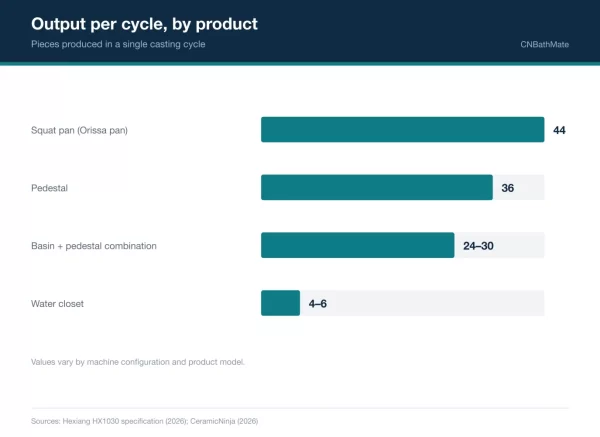
Figure 2 — Pieces produced in a single casting cycle, by product
How To Read A High Pressure Casting Machine Specification Sheet
Marketing pages often provide general information, but a professional supplier should provide a detailed specification sheet for a high pressure casting machine.
Understanding these specifications helps buyers compare different machines more accurately.
A typical single-unit commode casting machine specification may include:
| Parameter | Example Value | Why It Matters |
|---|---|---|
| Demolding method | Horizontal demolding + vacuum suction + compressed air | Affects green body release and breakage rate |
| Mold closing system | Hydraulic | Common configuration for this type of equipment |
| Clamping force | 400,000 N | Determines the type and size of products the machine can produce |
| Clamping precision | ±0.25 mm adjustable | Influences product consistency |
| Low-pressure casting pressure | 0.2 MPa | Filling stage |
| High-pressure casting pressure | 0.8–1.0 MPa | Requires stable pressure during production |
| Compressed air requirement | 0.6 MPa | Factory air supply requirement |
| Water pressure requirement | 0.3 MPa | Factory water supply requirement |
| Mold quantity | 8 sets | Directly affects production capacity |
| Forming cycle | 20–25 minutes adjustable | Influences daily output |
| Installed power | 55 kW | Determines factory electricity requirements |
| Machine weight | 114 tons | Requires proper foundation planning |
| Machine size | 25,800 × 7,150 × 3,630 mm | Determines factory space requirements |
| Yield rate | Above 98% | Confirm testing standards and product conditions |
Source: Hexiang HX1030 high pressure casting machine specification for water closet bodies (2026)
When reviewing a high pressure casting machine specification sheet, buyers should focus on whether the machine matches their actual production requirements rather than selecting equipment based only on the highest specification numbers.
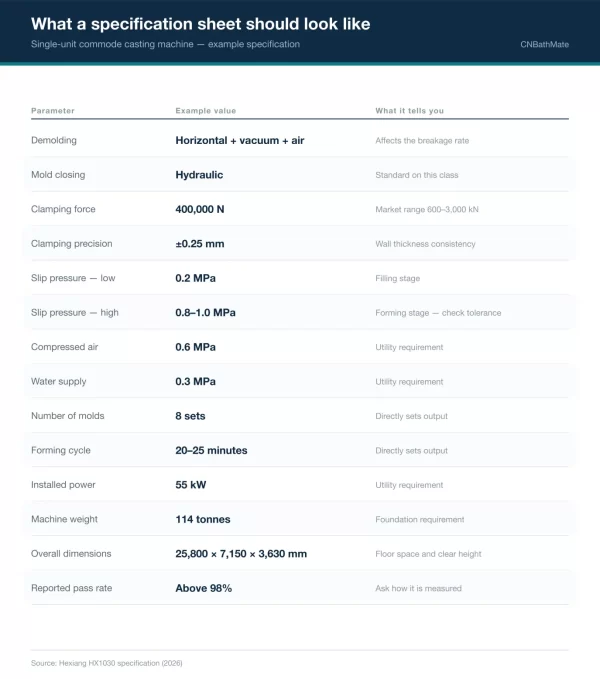
Figure 3 — What a specification sheet should look like
Two Specifications Buyers Should Pay Special Attention To
Clamping Force
Clamping force is one of the most important specifications when selecting a high pressure casting machine.
Machines on the market can have significantly different clamping force ranges. The required force depends on:
- Product size
- Mold structure
- Product complexity
For example, complex one-piece toilets usually require stronger machine capability compared with smaller sanitary ware products.
Mold Life
Mold life is another important factor affecting long-term production costs.
Different suppliers may provide different mold life estimates, ranging from thousands of cycles to more than 100,000 cycles.
The difference does not always mean one supplier is exaggerating. Different manufacturers may calculate mold life differently.
Before purchasing a high pressure casting machine, buyers should confirm:
- How mold life is calculated
- Whether the figure refers to theoretical or practical usage
- Replacement cost
- Expected maintenance requirements
Configuration is where quotations differ most
This is the section most buyers skip, and it is the reason two quotations for “a high pressure casting machine” can differ by a factor of several.
| Configuration choice | Options | What it changes |
| Mold parts | 2, 4 or 7 parts | 7-part molds are what make complex one-piece commodes possible. A 2-part machine cannot do it at any price |
| Molds per machine | 1 to 11 | Directly multiplies output and floor space |
| Machine structure | Single workspace, double workspace, battery plant | Throughput versus footprint and investment |
| Dedicated slip feed tank | Per machine, or shared | Pressure stability across a long, irregular casting. Separate tanks are the more reliable arrangement |
Source: DORST Technologies pressure casting system range (2026)
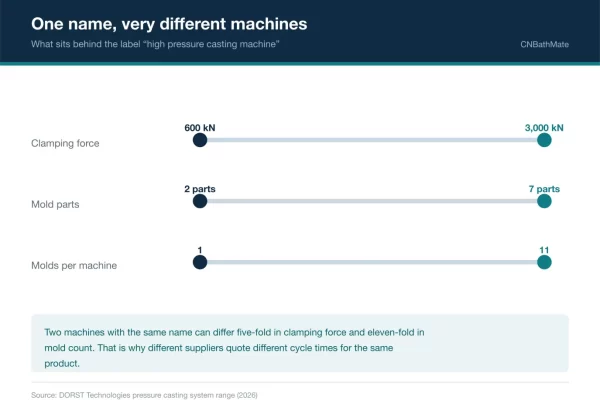
Figure 4 — One name, very different machines
The one question worth asking before anything else:
“Can this machine and mold configuration produce a one-piece commode? How many mold parts does it use for that, what is the cycle time, and what is the reject rate?”
A supplier who answers with a configuration and a number is a supplier worth continuing with. A supplier who says “yes, of course” without specifics is not.
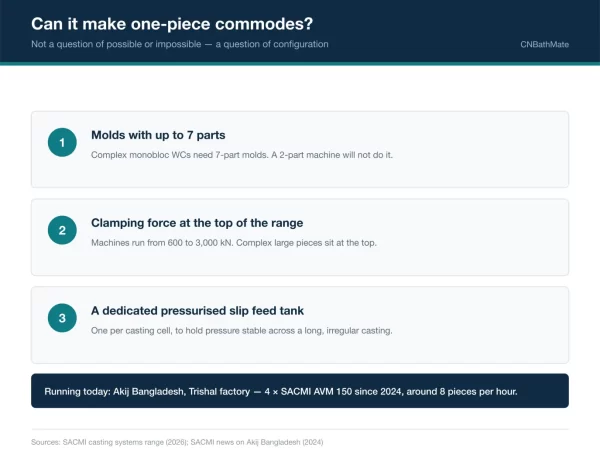
Figure 5 — Can it make one-piece commodes? It is a question of configuration
What Has To Be Ready On Your Site Before Installing A High Pressure Casting Machine
The high pressure casting machine itself is only one part of the complete production setup.
Many projects do not experience delays because of the machine. They experience delays because the factory site is not prepared before delivery.
Before installing a high pressure casting machine for sanitary ware production, buyers should confirm the following requirements:
| Requirement | Detail |
|---|---|
| Floor area | Multi-part casting cells require sufficient production space and additional access space around the machine |
| Foundation | A single commode casting unit can weigh around 114 tonnes. Foundation design is essential |
| Clear height | Check the machine height and lifting equipment requirements |
| Electrical supply | Typically 380V, 3-phase, stable power supply. Installed power depends on machine configuration |
| Compressed air | Required for control systems and mold cleaning |
| Water supply | Required for slip preparation and mold flushing |
| Slip system | Includes storage tanks, pipework, temperature control, and density control |
| Operators | PLC control requires basic technical understanding |
Sources: Hexiang specification (2026); YUTAI Machinery (2026)
Before the high pressure casting machine arrives, factories should complete site preparation to avoid unnecessary installation delays.
Six Checks Before The Machine Arrives
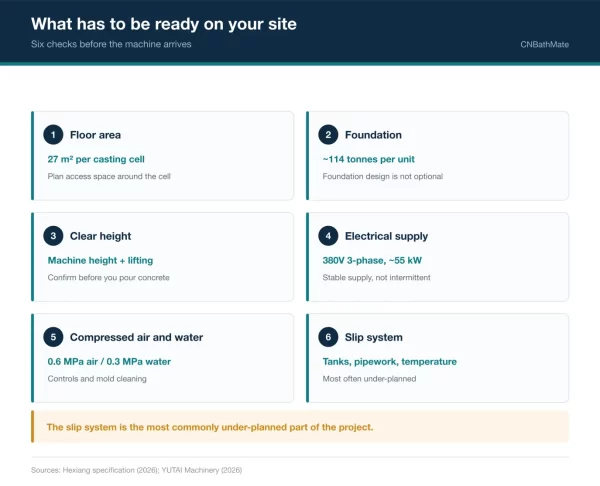
Figure 6 — Six checks before the machine arrives
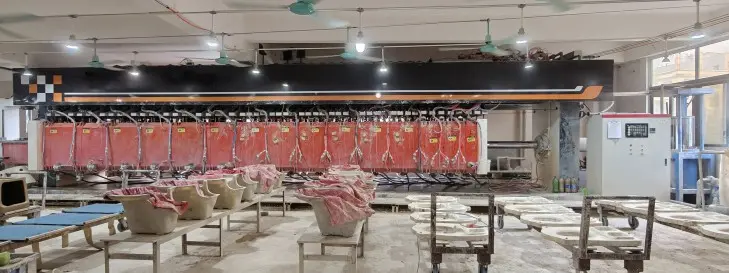
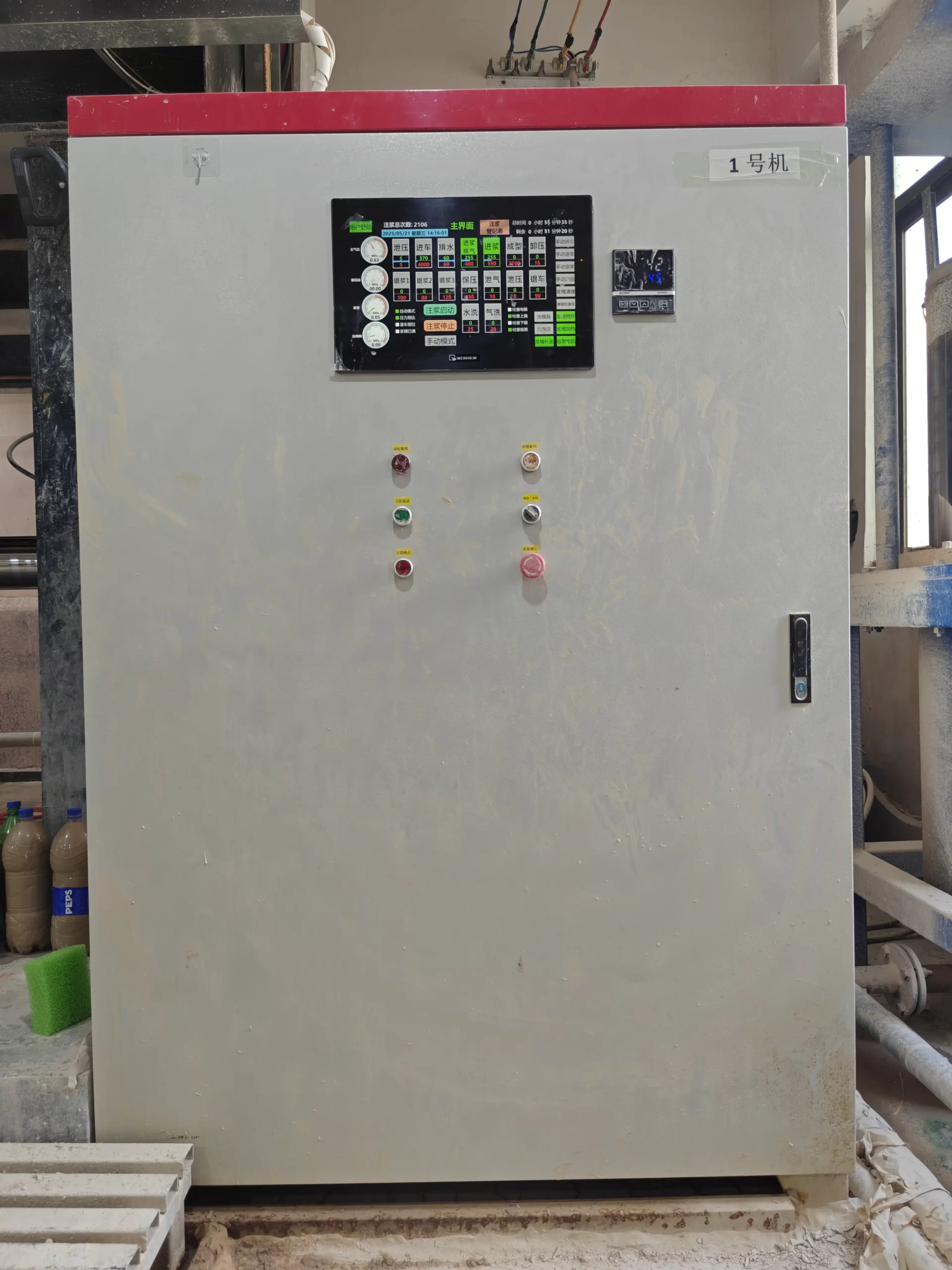
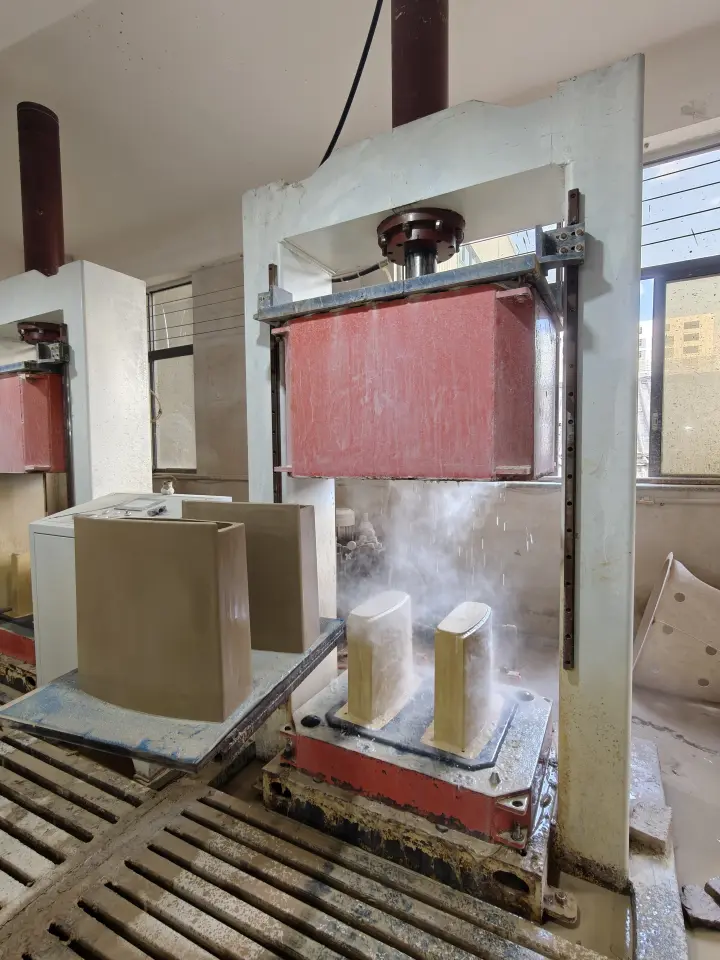
The Costs That Never Appear On The Quotation
The machine price is usually the first number buyers compare.
However, it is rarely the only factor that determines whether a project succeeds.
When evaluating a high pressure casting machine investment, buyers should consider additional costs:
| Item | Why It Matters |
|---|---|
| Installation and commissioning | Includes foundation work, pipework, electrical connection, and supplier technician support |
| Operator training | Confirm whether training is included and when it is provided |
| Spare parts availability | Delayed spare parts can stop production for weeks |
| Service response time | Understand who provides support and how quickly they respond |
| Mold replacement | Mold cost and replacement cycle affect long-term production costs |
| Slip system | Tanks, pumps, pipework, and controls are part of the complete project |
| Energy consumption | Lower green body water content can reduce drying energy consumption |
Sources: YUTAI Machinery (2026); Hexiang (2026)
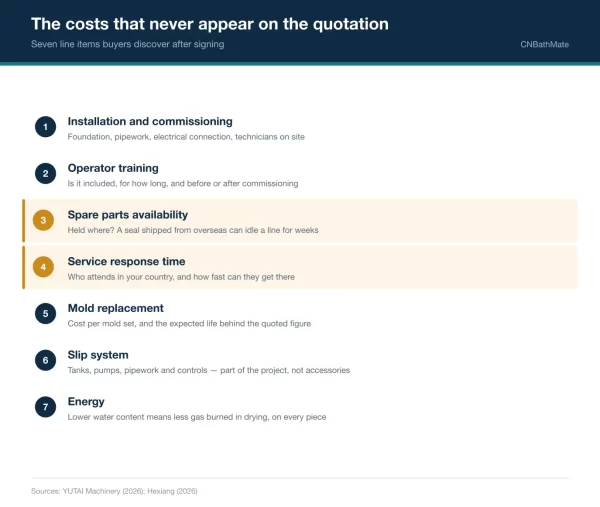
Figure 9 — Seven line items that never appear on the quotation
A complete evaluation of a sanitary ware casting machine should include both equipment cost and long-term operating costs.
Three Questions To Ask Every High Pressure Casting Machine Supplier
Before choosing a supplier, buyers should ask:
1. How much does casting pressure vary during a full production shift?
Do not only check the maximum pressure value. Pressure stability during continuous operation is more important.
2. When the machine stops, who provides technical support and how quickly?
Production downtime can affect delivery schedules, especially for export-oriented factories.
3. Are spare parts available locally or shipped from overseas?
For factories in Bangladesh and Pakistan, local support and spare parts availability can significantly affect production continuity.
High Pressure Casting Machine Buying Checklist
Before signing an agreement, buyers should review the following points.
Product And Capacity
- Can this high pressure casting machine produce my required products?
- How many pieces can it produce per day?
- What is the expected rejection rate?
- Can the machine support future product expansion?
Specification
- Have I received a detailed specification sheet?
- What is the clamping force?
- How many mold parts are included?
- What is the pressure tolerance during a full shift?
Molds
- How many mold sets are included?
- What is the expected mold life?
- What is the replacement cost?
- How long does mold replacement take?
Site Preparation
- Is the foundation ready?
- Is the production space sufficient?
- Are electricity, water, and compressed air systems prepared?
- Is the slip system planned?
Service Support
- Who installs and commissions the machine?
- Is operator training included?
- Where are spare parts stored?
- How fast can technical support respond?
Commercial Terms
- What is the delivery lead time?
- What is the warranty coverage?
- What is included and excluded from the quotation?
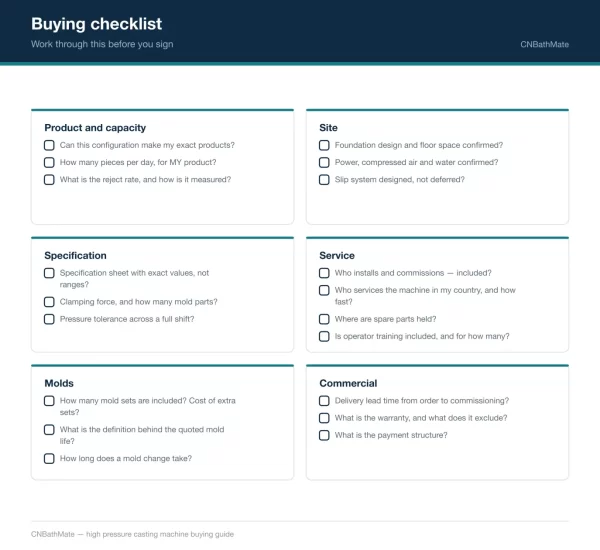
Figure 10 — Buying checklist
Cost And Payback Of High Pressure Casting Machine Investment
A high pressure casting line is a significant capital investment, and the most common mistake is judging it over one or two years. Assess it over five to ten years — that is the realistic operating life, and over that horizon the operating savings dominate the purchase price.
The comparison below is what the arithmetic usually comes down to:
| Battery Casting Bench | High Pressure Casting | |
| Molds required | 45 sets | 8 sets |
| Casting cycles | 1 per day | 57 per day |
| Daily output | 45 pieces | 456 pieces |
| Green body water content | 23% | 17% |
| Floor area required | 63 m² | 27 m² |
| Operators | 2 | 2 |
| Continuous production | No | Yes |
| Control | Manual | Automatic |
Source: Hexiang comparison data (2026)
The same two operators, on less than half the floor area, produce ten times the output. And because the savings do not come from cutting headcount, the case is strongest where you are volume-constrained rather than labour-constrained.
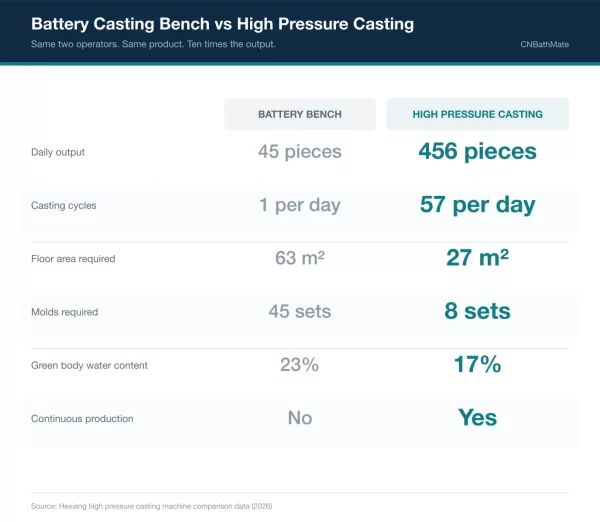
Figure 11 — Battery casting bench versus high pressure casting
FAQ
What is the typical cycle time of a high pressure casting machine?
The cycle time depends on the machine configuration and product type.
Most sanitary ware products require around 20 to 30 minutes per cycle. Larger products such as commodes usually require more time compared with smaller products such as basins.
How many high pressure casting machines do I need?
The required number of machines depends on:
- Target daily output
- Product type
- Pieces per cycle
- Number of production shifts
A professional supplier should calculate the production requirement based on your actual product mix instead of providing only a general answer.
Can I start with one high pressure casting machine and expand later?
In many cases, yes.
Production layouts and mold configurations can often be planned for future expansion. Buyers should discuss future production plans with suppliers before selecting the initial configuration.
Can a high pressure casting machine produce my existing sanitary ware products?
This depends on:
- Mold availability
- Product design
- Machine configuration
The machine itself is only one part of the solution. Mold compatibility is also important.
What happens if the high pressure casting machine breaks down?
Before purchasing, buyers should confirm:
- Who provides technical service
- Response time
- Spare parts availability
- Remote support options
Reliable after-sales support is an important factor for continuous production.
Is installation included when purchasing a high pressure casting machine?
Not always.
Buyers should confirm whether the quotation includes:
- Foundation work
- Electrical connection
- Plumbing
- Commissioning
- Operator training
Conclusion
Choosing a high pressure casting machine requires more than comparing equipment prices.
Sanitary ware factories should evaluate:
- Production requirements
- Machine specifications
- Mold configuration
- Factory conditions
- Installation requirements
- Long-term service support
A suitable high pressure casting machine for sanitary ware production can help manufacturers improve efficiency, maintain stable quality, and support future production growth.
By understanding the key purchasing factors and working with an experienced supplier, factories can make more informed decisions when investing in sanitary ware manufacturing equipment.
About CNBathMate
CNBathMate is a ceramic sanitary ware manufacturer based in Chaozhou, China, producing commodes, basins, and bathroom fittings since 2009, with a branch in Bangladesh since 2018.
Unlike companies that only resell equipment, CNBathMate uses high pressure casting technology in its own production and understands how this equipment performs in real factory conditions.
The company operates its own production line and applies practical manufacturing experience when helping other factories evaluate a high pressure casting machine.
CNBathMate can support customers with:
- Machine selection based on product requirements
- Specification sheet review
- Production planning consultation
- Installation and commissioning coordination
- Spare parts and after-sales support
With experience as both a manufacturer and equipment user, CNBathMate focuses on helping sanitary ware factories select suitable production solutions.
Contact CNBathMate
Send your product list and target daily output, and CNBathMate can help evaluate a suitable high pressure casting machine configuration together with technical specifications and product information.
CNBathMate provides sanitary ware manufacturing solutions including:
- High pressure casting production line
- Ceramic sanitary ware production
- OEM/ODM manufacturing
- Private mold solutions
Here is detailed information about high pressure casting machine.